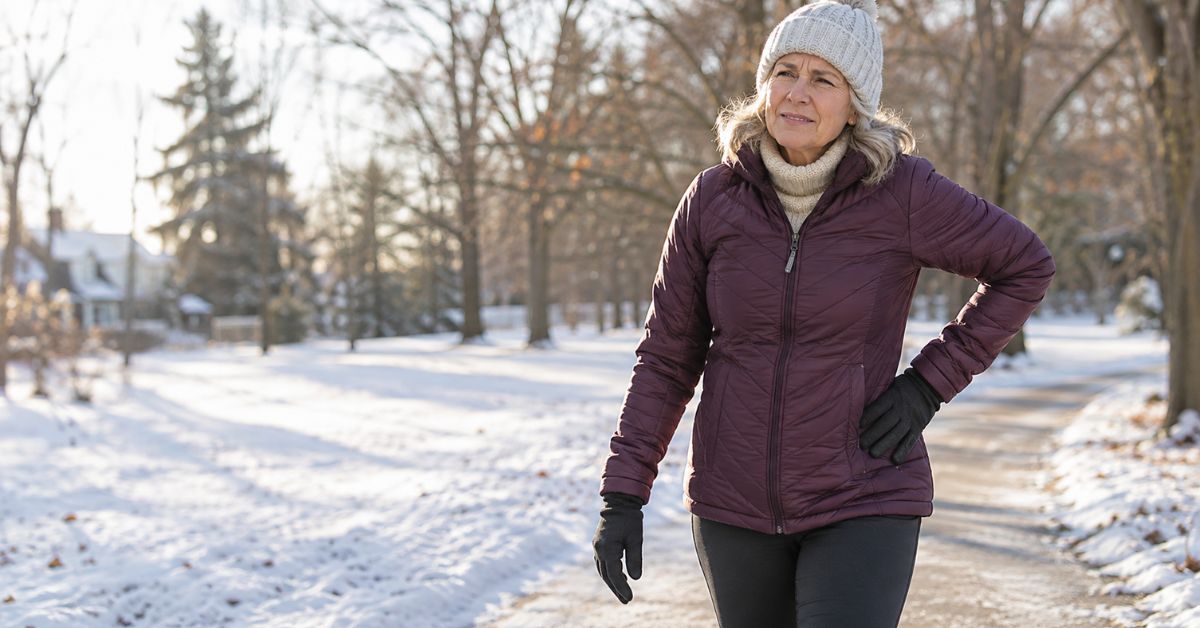



Winter in Northwestern Pennsylvania brings beautiful snowy landscapes, but it also creates challenges for people recovering from hip or knee replacement surgery. Icy sidewalks, snow-covered driveways, slippery parking lots, and freezing temperatures can make ordinary activities more difficult, especially during the early stages of recovery.
Whether you recently underwent joint replacement or are preparing for surgery during the colder months, taking a few extra precautions can help you stay safe and protect your progress.
The most important winter safety tips after hip or knee replacement include avoiding icy surfaces, wearing supportive footwear, using recommended mobility aids, following your care team’s recovery guidance, and preparing your home for winter weather. Your orthopedic surgeon’s instructions should always guide your activity level and movement precautions.
Here are nine practical ways to navigate winter more safely while recovering from joint replacement.
Why Winter Can Be Challenging After Hip or Knee Replacement
Recovering from joint replacement involves gradually rebuilding strength, improving mobility, and returning to everyday activities. During this process, some patients experience temporary changes in balance, endurance, flexibility, or confidence when walking.
Winter weather can introduce additional obstacles.
Snow and ice increase the risk of slipping, while bulky clothing and winter boots may make movement more awkward. Shorter daylight hours can also make outdoor hazards harder to see.
For patients recovering from hip or knee replacement in Erie, Meadville, and surrounding Pennsylvania communities, lake-effect snow and changing winter conditions can make even short trips outside unpredictable.
A fall during recovery could cause an injury or potentially affect the healing joint. That makes fall prevention particularly important.
Fortunately, many winter-related hazards can be reduced through preparation, appropriate footwear, assistance, and careful planning.
9 Winter Safety Tips After Hip or Knee Replacement
1. Wear Supportive, Slip-Resistant Winter Footwear
Your choice of footwear can make a meaningful difference in stability, especially when walking near snow or ice.
During joint replacement recovery, shoes should fit securely, provide appropriate support, and offer reliable traction on the surfaces you are expected to walk across.
Look for footwear with:
- Slip-resistant soles suitable for winter conditions.
- Low, stable heels.
- Secure closures that prevent the foot from sliding.
- A comfortable fit that does not restrict circulation.
- A design that is manageable to put on and remove.
Avoid loose slippers, worn-out shoes, or footwear with smooth soles.
Some winter traction accessories may help on certain outdoor surfaces, but they can also create difficulties on smooth indoor flooring. Ask your care team whether a specific product is appropriate before using it.
Winter recovery tip: If bending to put on boots is difficult or restricted after hip replacement, ask your care team about long-handled shoehorns, adaptive dressing tools, or assistance from a family member.
2. Avoid Walking on Snow and Ice Whenever Possible
One of the simplest ways to reduce your risk of falling is to avoid slippery outdoor surfaces during recovery.
Even if you feel confident walking indoors, icy pavement requires different balance and coordination. A small patch of black ice may be difficult to recognize until you are already standing on it.
Before leaving home:
- Check the weather forecast.
- Choose cleared and treated walking routes.
- Avoid snow-covered shortcuts.
- Allow extra time to reach your destination.
- Postpone nonessential outings during hazardous conditions.
If outdoor walking is necessary, make sure you have a stable route and any assistance recommended by your care team.
Avoid assuming that a cane, walker, or traction shoe makes icy conditions completely safe.
Winter recovery tip: When possible, ask someone to bring your vehicle closer to a cleared entrance rather than walking across a slippery parking lot.
3. Use Your Walker, Cane, or Mobility Aid as Directed
After hip or knee replacement, your orthopedic care team may recommend a walker, cane, crutches, or another mobility aid.
These devices help provide support while strength, balance, and walking confidence improve.
Even when patients begin feeling better, discontinuing an assistive device too early can create unnecessary risks.
Winter adds another consideration: mobility aids that work well on smooth indoor floors may behave differently on wet pavement, snow, or ice.
Before going outdoors, make sure that:
- Your mobility aid is adjusted appropriately.
- Rubber tips or walker components are in good condition.
- You understand which surfaces are safe to navigate.
- Any ice-specific accessories have been approved by your care team.
Do not experiment with unfamiliar equipment on slippery ground.
Winter recovery tip: Ask your orthopedic care team to review outdoor mobility precautions before your first winter outing after surgery.
4. Keep Walkways, Driveways, and Entrances Clear
Snow and ice accumulation around your home can make entering and exiting especially challenging during joint replacement recovery.
A slippery front step or untreated driveway can create a hazard before you even reach your vehicle.
Arrange for a family member, neighbor, property manager, or snow removal service to maintain your outdoor walking areas.
Focus on keeping:
- Entryways and porches clear of snow.
- Steps and handrails accessible.
- Sidewalks and driveways treated for ice.
- Outdoor lighting functional.
- Paths wide enough for any recommended mobility aid.
Avoid taking on physically demanding snow removal tasks before your surgeon has cleared you for those activities.
Shoveling snow can involve lifting, twisting, pushing, and working on slippery surfaces. These movements may be inappropriate during certain stages of recovery.
Winter recovery tip: Arrange snow removal assistance before surgery rather than waiting for the first major storm.
5. Take Extra Care Getting In and Out of Vehicles
Winter travel often involves navigating parking lots, stepping over snowbanks, and getting into vehicles while wearing bulky clothing.
For someone recovering from joint replacement, these everyday movements may require more attention.
Choose parking areas that are cleared, relatively level, and close to the building entrance. Before getting out, make sure there is enough room to open the vehicle door and position yourself safely.
Consider having someone assist with doors, bags, and any recommended mobility equipment.
Avoid rushing, especially when the ground is wet or icy.
Your orthopedic care team should guide you on how to enter and exit a vehicle while following your specific postoperative precautions. These instructions can vary depending on the operation and surgical approach.
Winter recovery tip: If you are attending a postoperative appointment, arrange transportation that allows convenient access to a cleared drop-off area.
6. Stay Active and Follow Your Care Team’s Recovery Guidance
Winter weather may make outdoor exercise and travel more difficult, but staying active within your recommended recovery guidelines remains important.
Appropriate movement during recovery can help patients work toward improved mobility, strength, flexibility, and everyday function after joint replacement.
According to the American Academy of Orthopaedic Surgeons, following appropriate activity and exercise recommendations is an important part of knee replacement recovery.
Depending on your individualized recovery plan, approved indoor activities might include short walks, gentle movement, or other activities recommended by your orthopedic care team.
If snow or ice prevents you from attending a postoperative follow-up appointment, contact your care team to discuss appropriate alternatives or rescheduling.
Do not introduce unfamiliar exercises or activities simply because you are spending more time indoors.
Winter recovery tip: Identify a clear, well-lit indoor walking route before surgery so you have a suitable place for approved movement when outdoor conditions are poor.
For additional recovery guidance, read our article on do’s and don’ts after knee replacement.
7. Make Your Home Safer During Winter
Not all winter-related falls happen outdoors.
Snow, rain, and slush can be tracked into the house, leaving entryways and hard flooring slippery. Wet boots, loose mats, and cluttered hallways can create additional obstacles.
The Centers for Disease Control and Prevention recommends practical fall-prevention measures such as removing tripping hazards, improving lighting, and installing appropriate handrails.
Consider these winter home safety precautions:
- Keep entryways dry and clean.
- Remove unsecured throw rugs and loose mats.
- Make sure hallways and stairs are well-lit.
- Keep electrical cords and clutter out of walking areas.
- Use secure handrails where appropriate.
- Arrange frequently used items within easy reach.
- Keep a phone accessible in case you need assistance.
If you use a walker or cane, make sure furniture placement allows enough space to move comfortably.
Winter recovery tip: Ask someone to inspect your main walking routes before you return home from surgery, paying special attention to entrances, bathrooms, and stairs.
8. Dress Warmly Without Restricting Your Movement
Cold temperatures make warm clothing essential, but heavy coats, long scarves, and bulky winter garments can sometimes interfere with movement.
During joint replacement recovery, prioritize clothing that keeps you comfortable while allowing you to move safely.
Consider lightweight layers rather than relying entirely on one oversized coat.
Choose pants that do not drag along the floor and outerwear that does not interfere with your walker, cane, or ability to see where you are stepping.
If dressing requires bending, balancing on one foot, or reaching in ways your surgeon has restricted, ask about adaptive dressing equipment.
Take your time getting ready before leaving the house.
Winter recovery tip: Whenever possible, finish putting on your winter clothing while seated securely indoors rather than trying to adjust boots or clothing while standing outside.
9. Plan Ahead for Winter Weather and Ask for Help When Needed
Recovering from joint replacement requires patience and preparation. Winter weather makes advance planning especially useful.
Before a forecasted snowstorm, consider what you may need over the next several days.
This could include:
- Arranging transportation to medical appointments.
- Confirming snow removal assistance.
- Stocking necessary groceries and household supplies.
- Keeping prescribed medications available.
- Coordinating help with errands or household tasks.
- Preparing for possible travel delays.
For patients who live alone, establishing a reliable support system can provide additional reassurance.
Family members, neighbors, caregivers, and community services may be able to assist with tasks that temporarily become difficult.
Winter recovery tip: Prepare a short list of people you can contact if weather conditions prevent you from safely leaving home.
As your recovery progresses, your orthopedic team can help you understand when different activities may be appropriate again.
Can Cold Weather Affect Hip or Knee Replacement Recovery?
Some people notice increased joint stiffness, aching, or discomfort during colder weather. However, the relationship between weather conditions and pain after joint replacement is not fully understood.
A 2025 study examining patients after hip and knee replacement did not find a significant relationship between postoperative pain scores and the weather variables studied, including temperature and barometric pressure. Other research has documented weather-related discomfort in some patients.
Importantly, feeling stiff or uncomfortable in cold weather does not necessarily mean that your joint implant is damaged.
If cold weather makes movement feel uncomfortable, follow your care team’s activity recommendations and allow enough time to prepare for outings.
New, severe, persistent, or worsening pain should not automatically be attributed to the weather, particularly during early recovery.
Contact your orthopedic care team if symptoms change unexpectedly.
When Should You Contact Your Orthopedic Surgeon?
While some discomfort, swelling, and stiffness may occur during recovery, certain symptoms require medical attention.
Contact your orthopedic team promptly if you experience:
- A fall followed by new or increasing hip or knee pain.
- Unexplained difficulty bearing weight.
- Increasing redness, warmth, swelling, or drainage around the incision.
- Fever or shaking chills.
- New calf pain or significant one-sided leg swelling.
- Pain that becomes unexpectedly severe or progressively worse.
If you fall and cannot stand, have a visibly deformed limb, or suspect a serious injury, avoid trying to walk on the affected leg and seek emergency medical assistance.
Sudden shortness of breath, chest pain, or fainting may indicate a medical emergency. Call 911 immediately.
Your surgical team may provide additional instructions specific to your procedure and medical history. Always follow those recommendations.
Preparing for Hip or Knee Replacement During a Pennsylvania Winter
If you are planning hip or knee replacement during winter, preparing ahead of time may make your recovery environment more manageable.
Before surgery, review your home layout, outdoor walkways, transportation arrangements, and available support.
Discuss your winter concerns with your orthopedic team, especially if you live alone, have stairs at home, or anticipate difficulty attending follow-up appointments during snowy conditions.
At Whole Health Orthopedic Institute, preparation is an important part of the patient experience.
Our approach emphasizes patient education, individualized medical optimization, and planning designed to support recovery before and after surgery.
Through THE Orthopedic Journey™, patients can learn more about the preparation and support involved in joint replacement care.
Some eligible patients may also be candidates for same-day or outpatient joint replacement. The appropriate setting depends on individual health factors, surgical considerations, and the medical team’s evaluation.
Winter does not automatically mean you need to postpone an orthopedic consultation. Planning ahead can help you make an informed decision about the timing of surgery.
Hip and Knee Replacement Care in Meadville and Erie, PA
At Whole Health Orthopedic Institute, we understand that successful joint replacement care involves more than the surgical procedure itself.
Founded by Dr. Ryan G. Molli, DO, an orthopedic surgeon with specialized fellowship training in adult reconstruction and total joint replacement, our institute emphasizes advanced orthopedic expertise and a comprehensive approach to patient care.
Our services include hip and knee replacement options such as Jiffy Knee™ and THE Beach-Cut Hip™.
These approaches are designed to preserve important soft-tissue structures where appropriate. Whether a particular technique is suitable depends on the patient’s condition and surgical evaluation.
We also emphasize medical optimization, preparation, patient education, and postoperative guidance to support each patient’s individual recovery journey.
With offices in Meadville and Erie, Whole Health Orthopedic Institute provides access to specialized orthopedic care throughout Northwestern Pennsylvania.
Frequently Asked Questions About Winter Safety After Joint Replacement
Is it safe to walk outside in winter after knee replacement?
Outdoor walking may be appropriate after knee replacement when your orthopedic care team has cleared you and conditions are safe. During early recovery, avoid icy or snow-covered surfaces. Choose cleared, stable walkways and use recommended mobility aids. If conditions are slippery, consider approved indoor walking instead.
How can I avoid falling on ice after hip replacement?
The safest approach is to avoid ice whenever possible. Arrange for cleared walkways, wear supportive slip-resistant footwear, and follow instructions for any recommended mobility aid. Do not assume that traction devices make icy surfaces safe. Ask your orthopedic care team about outdoor walking precautions before returning to winter activities.
Can cold weather make my new hip or knee feel stiff?
Some patients report stiffness or discomfort during colder weather, although research on the relationship between weather and joint replacement pain is mixed. Cold weather does not necessarily indicate a problem with an implant. Contact your orthopedic team if discomfort is new, severe, persistent, or accompanied by other concerning symptoms.
Can I shovel snow after hip or knee replacement?
Avoid shoveling snow until your orthopedic surgeon has cleared you for that activity. Snow removal involves lifting, pushing, twisting, and navigating potentially slippery ground. The appropriate time to resume these tasks varies depending on your procedure, recovery progress, and overall health. Arrange assistance while you are recovering.
What should I do if I slip or fall after joint replacement?
If you fall, assess whether you are injured before attempting to move. Seek urgent medical evaluation for significant pain, deformity, or difficulty bearing weight. Call 911 if you cannot get up safely or suspect a serious injury. Inform your orthopedic team about any fall during recovery, even if you initially feel well.
Can I have hip or knee replacement surgery during winter?
Yes. Hip and knee replacement procedures can be performed during winter. However, seasonal weather may affect transportation, home preparation, and access to follow-up care. Discuss your circumstances with your surgeon to determine an appropriate surgical plan and whether additional support should be arranged before returning home.
Stay Safe This Winter With Whole Health Orthopedic Institute
Winter recovery after hip or knee replacement does not have to mean putting every aspect of your daily life on hold.
By preparing your home, avoiding hazardous walking conditions, following your care team’s recovery recommendations, and taking appropriate safety precautions, you can take practical steps toward a safer recovery.
If chronic hip or knee pain is limiting your mobility, or you are considering joint replacement surgery, the team at Whole Health Orthopedic Institute can help you explore your options.
No Referrals Necessary
Call 1-833-HIP-KNEE
Contact Whole Health Orthopedic Institute to discuss your orthopedic care options.
Meadville Office
321 Arch Street, Suite 101
Meadville, PA 16335
Erie County Office
3347 West 12th Street, Suite 104
Erie, PA 16505
This article provides general educational information and does not replace individualized medical advice. Recovery recommendations and activity restrictions vary depending on the patient, procedure, and surgeon’s instructions.